
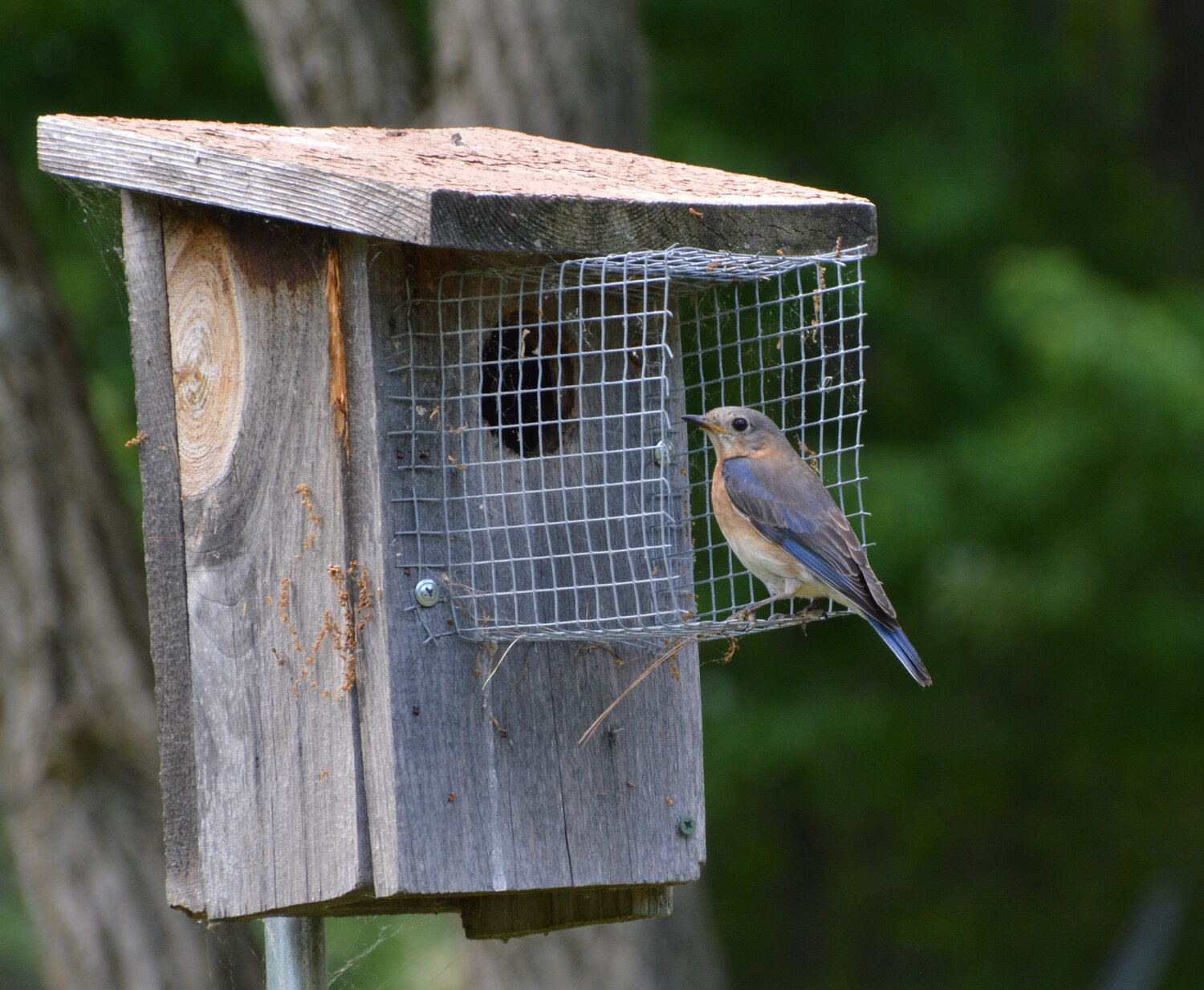
OCONTO – It’s a jungle out there for bluebirds native to Oconto. But thanks to volunteer efforts, many are living in protected bird housing, experts said.
Bluebird sightings on the Bluebird and Storybook Trails at Copper Park in the City of Oconto are on the upswing after a dangerous population decline became concerning about 40 years ago, said Gene Birr, the Oconto contact for the Bluebird Restoration Association of Wisconsin.
With invasive starlings and house sparrows taking over bluebirds’ nests, the bluebird population was at risk, spurring the Bluebird Restoration Association to take action, he said.
While bluebirds naturally seek to nest in hollow trees or fence posts, as a conservation tactic, Birr assists the association in building bluebird nest boxes for volunteer monitors. The nest boxes are built with a small, oval opening to the nesting cavity to keep out invasive species.
“We’re never going to be free of starlings and house sparrows. The nesting boxes for bluebirds give bluebirds a chance. The boxes are monitored to make sure the bluebirds and house wrens and swallows will use them,” he said.
They’re carefully designed to prevent house sparrows and other invasive species from getting in and destroying their eggs, said Birr, a retiree who monitors nest boxes.
While other birders might take a break during the cold weather months, Birr said he builds about 100 to 200 bird boxes every winter. The Bluebird Restoration Association of Wisconsin provides funds for the boxes.
The association got started about 40 years ago when bluebird numbers were dropping rapidly, he said. Thanks to the efforts of volunteers concerned about bluebirds, “They’ve made a tremendous comeback. The bluebird population is about back to normal now,” he said, noting the nest boxes have helped to regenerate the population.
“I’m active. I spend my winters building birdhouses and acquiring the metal poles we use to put them up in the spring,” he said. “That’s what keeps me busy.”
The boxes are 11 inches high and 5 inches square, he said. They’re mounted on a seven-foot pole. A small oval hole, with a diameter about 1.5 inches, is set about 5 inches above the floor of the nesting box, he said.
Bluebirds only need an inch and a half to enter the nesting boxes, he explained.
The opening is deliberately too small for invasive species. “If you make it any bigger, starlings can get into it. Any smaller, you might restrict the bluebird,” Birr said.
Birr also monitors a trail of 130 nest boxes, checking the nest boxes once per week to record the kind of bird using the nest box and the status of the nest.
During the warm weather, Birr records where the box is located, how many eggs, chicks and young are in it and any problems with it.
When a racoon or another critter damages the eggs or chicks, the monitor cleans out the nest box so another bird will move in, he said.
While bluebirds migrate south for the winter in late October or early November, chickadees can use the nests for the winter, Birr said.
Many of Wisconsin’s birds have faced an onslaught of hazards impacting their fragile lives, from new construction that displaces natural habitats to attacks by cats and other predators, said Cathy Carnes, an Oconto resident and retired biologist who worked for U.S. Fish and Wildlife Service and now studies birds as an avocation. Many birds only live for about two years in nature, she said.
Carnes said she and her husband monitor four bluebird nest boxes at City Park in Oconto.
“We check the boxes every week during the nesting season and record what we see (e.g., nest, eggs, chicks) to determine how many young birds fledge when they are mature enough to leave the nest,” she said.
“The bluebird nest box trail at City Park and elsewhere in and around Oconto are helping bluebirds boost their population efforts.”
Native species face threats from invasive species, while others crash into windows in pursuit of bird feeders placed too close to windows, she said.
But the top threat to birds are cats, unowned felines and pet cats allowed outdoors, according to scientific studies. Outdoor cats kill between 1.3 billion and 4 billion birds annually, according to a comprehensive study published in “Nature Communications” and discussed by the American Bird Conservancy.
Raccoons and other critters also threaten to attack bluebird eggs and chicks, reducing the number that survive into adulthood.
Other risks to birds involve human activity, such as hunting. Deer hunters who don’t carry out the carcass also contribute to bird poisonings when the birds eat lead shot, Carnes said.
“There’s an effort to get hunters to use copper bullets rather than lead,” she said.


Comments
No comments on this item Please log in to comment by clicking here