
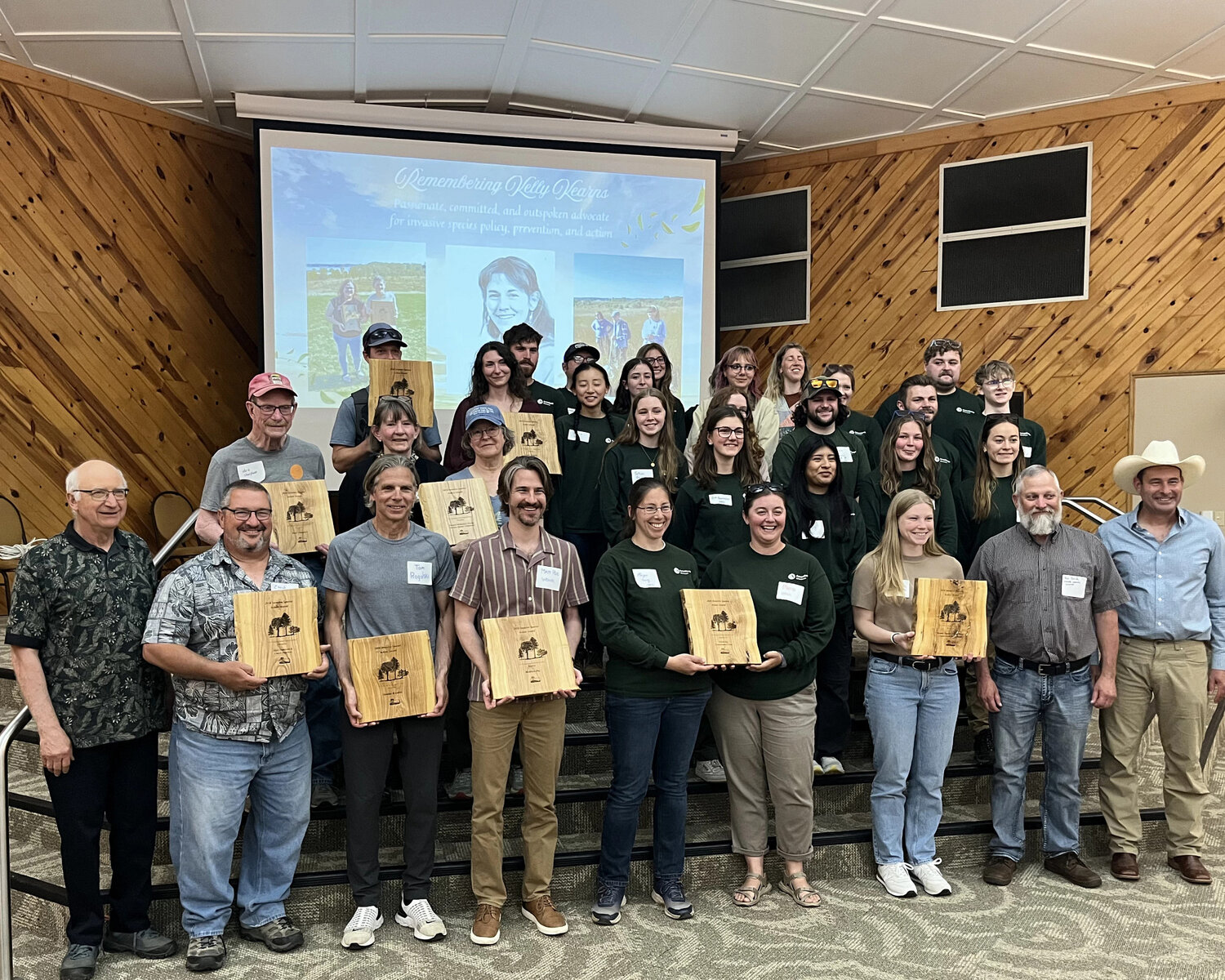
NORTHEAST WIS. – The Wisconsin Department of Natural Resources (DNR) congratulates the winners of the 2026 Invasive Species Action Awards, presented by the Wisconsin Invasive Species Council during Invasive Species Action Month. The governor-appointed council advises the DNR and the state legislature on invasive species issues.
The council awards individuals and groups in professional and volunteer settings for their exemplary efforts to prevent the spread of or manage invasive species in Wisconsin. From aquatic settings and wetlands to grasslands and forests — this year’s cohort covers many ecosystems and contributes to many different aspects of invasive species work with the ultimate goal of protecting Wisconsin’s natural areas, economy and people.
Winning in the professional group category was Sheri Denowski and Chuck Druckrey of the Marinette County Land and Water Conservation Division — Land Information Department.
Denowski and Druckrey have championed the county’s response to the recently arrived invasive plant European frog-bit. Their extensive response efforts have led to the removal of more than 10,000 pounds of European frog-bit from Marinette County since starting work four years ago. Denowski and Druckrey have demonstrated unwavering commitment in managing this novel aquatic invasive species.
Also winning in the same category was the Oconto County Land and Water Conservation Department.
With the full support of their supervisors and board, Ken Dolata and Emily Schwartz have propelled the county’s European frog-bit response team, conducting early detection surveys, “Clean Boats, Clean Waters” inspections, inventories and manual removal of more than 15,000 pounds of European frog-bit.
Their efforts have helped to revive the habitat for migratory and nesting birds and increased recreational opportunities.
Congratulations to this year’s award recipients for their dedication to the prevention, control and eradication of invasive species in Wisconsin. More information about invasive species and resources for helping to prevent their spread is available on the DNR’s website.


Comments
No comments on this item Please log in to comment by clicking here